Oct Back to list
aba blown film machine technical performance analysis
When evaluating the efficiency of plastic film production, the choice between single-head and multi-head configurations often dictates the long-term profitability of a facility. The move toward specialized extrusion setups is driven by the need to balance output volume with the flexibility to handle varied polymer grades.
Across the global packaging sector, manufacturers are increasingly seeking ways to reduce their physical footprint without sacrificing production capacity. This shift has placed a spotlight on high-efficiency extrusion systems that can optimize raw material usage while maintaining strict thickness and width tolerances for commercial-grade films.
Understanding the technical nuances of the aba blown film machine and its derivatives is essential for operators aiming to modernize their lines. By analyzing the synergy between screw design, die head configuration, and cooling systems, producers can achieve a more sustainable and scalable manufacturing process.
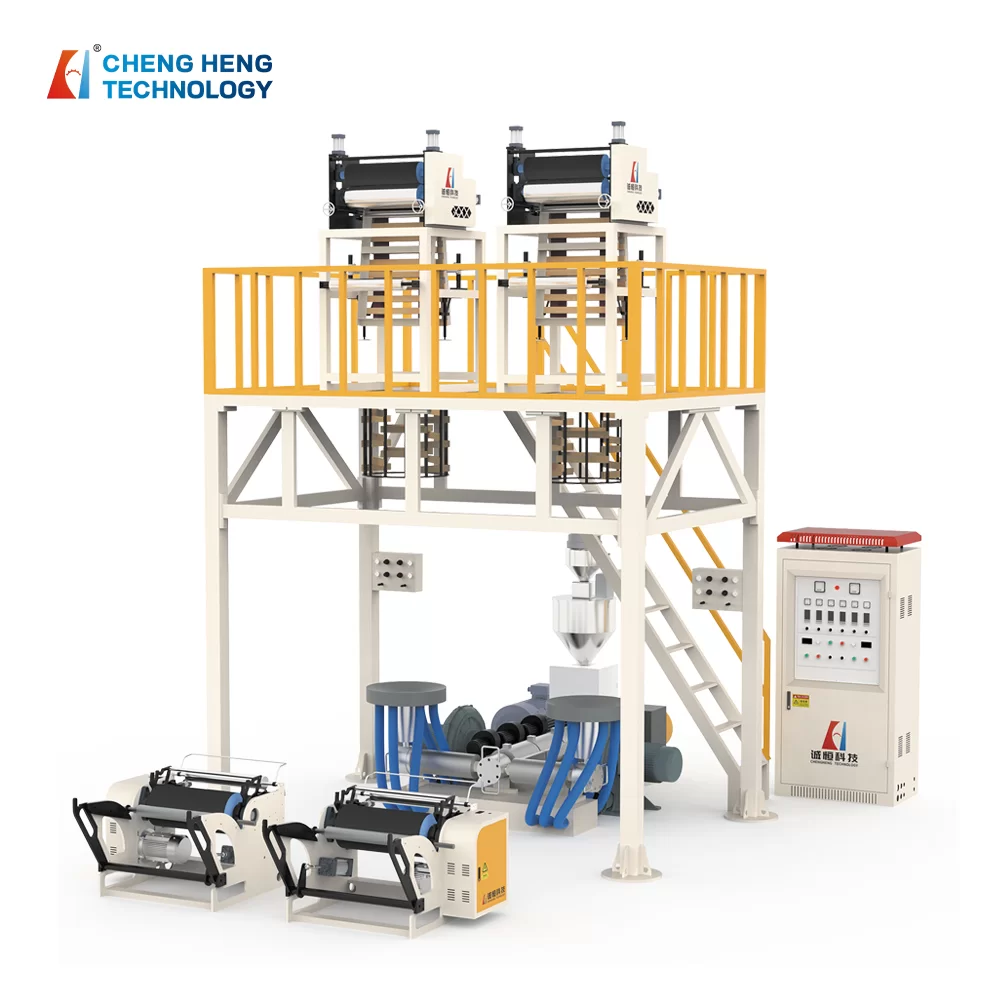
The Logic of Multi-Head Extrusion
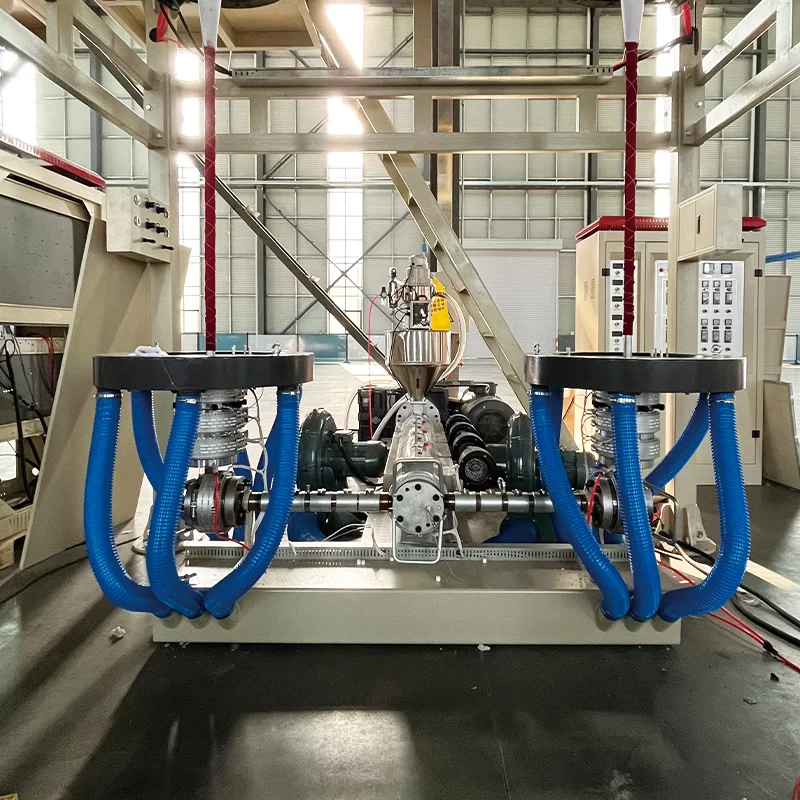
The fundamental advantage of a twin-head or multi-layer system lies in the consolidation of the extrusion process. Rather than operating two separate machines, a single screw cylinder can feed multiple die heads, effectively doubling the output per square meter of workshop space.
This architectural choice significantly lowers the overhead associated with power supply and cooling water pumps. For manufacturers specializing in small-width films, such as T-shirt bags or shopping bags, this configuration provides the ability to produce two independent rolls of film simultaneously from one melt stream.
Engineering the Core Components
The longevity of an extrusion line depends heavily on the metallurgy of the screw and cylinder. High-quality alloy steel, treated with nitration and precision finishing, is critical for ensuring the necessary hardness and corrosion resistance. This prevents premature wear when processing abrasive materials like CaCO3-filled PE or recycled plastics.
In terms of design logic, the L/D ratio of the screw (such as the 32:1 ratio found in professional setups) ensures sufficient plasticization and homogenization of the melt. When combined with force-feeding mechanisms, the system can maintain a stable output even when handling materials with varying bulk densities.
The integration of precision gearboxes and high-torque main motors (ranging from 15kw to 37kw depending on the model) allows for precise control over the extrusion speed. This stability is what enables the production of films with extremely tight thickness tolerances, ranging from 0.008mm for HDPE to 0.12mm for LDPE.
Operational Efficiency Benchmarks
Measuring the performance of a film blowing line requires looking beyond simple output kilograms per hour. True efficiency is found in the balance between energy consumption and the stability of the bubble during the blowing process.
The critical value of a twin-head system is its ability to maintain independent operation for each head, meaning maintenance on one die does not necessarily require the total cessation of production for the entire line.
When utilizing an aba blown film machine, the distribution of materials across the A, B, and A layers allows for the optimization of costs. By placing high-performance polymers on the outer layers and recycled or lower-cost materials in the center, manufacturers can meet strength requirements while reducing raw material expenditure.
Resource Optimization Analysis
Resource optimization in the plastics industry focuses on three primary vectors: workshop area, labor requirements, and energy overhead. A double-head configuration inherently optimizes these by sharing the primary power systems and the physical frame of the machine.
From a quantitative perspective, the reduction in floor space is approximately 50% compared to operating two single-head machines. This allows factories to either increase their total capacity within existing walls or reduce their real estate costs significantly.
Figure 2. Operational Efficiency Index by Configuration
Versatility in Commercial Applications
The adaptability of modern extrusion lines allows for a wide range of product diversification. A single machine frame can simultaneously produce films of different widths and thicknesses, enabling a manufacturer to fulfill a food-grade PE order and an industrial-grade PE order in the same production cycle.
Typical industrial settings utilize these machines for the production of high-volume consumables. Because the twin heads can operate independently, the downtime associated with material changes or die cleaning is minimized, ensuring that the facility maintains a consistent output of shopping bags, rolling bags, and T-shirt bags regardless of the specific batch requirements.
Evolution of Film Blowing Technology
The transition from single-layer to multi-layer extrusion represents a move toward functional material engineering. While single-layer lines are efficient for basic bags, multi-layer systems allow for the integration of barrier properties, UV protection, and improved puncture resistance.
Current trends indicate a move toward "smart" extrusion, where sensors monitor melt pressure and temperature in real-time to automatically adjust screw speed. This reduces waste during the startup phase and ensures that the film properties remain consistent over long production runs.
Looking forward, the integration of more biodegradable resins will challenge existing screw designs. The industry is moving toward materials that require more precise temperature control to prevent degradation, making the precision of the heating elements and the quality of the alloy steel in the cylinder more critical than ever.
Selection Framework for Manufacturers
Choosing the correct machinery requires a trade-off analysis between output capacity and versatility. A manufacturer must determine if their primary need is the mass production of a single film type or the ability to pivot quickly between various specifications.
Technical specifications, such as the die diameter and the screw diameter, directly impact the maximum film width and the overall output rate. For instance, a Φ65 screw typically supports higher output rates (up to 120kg/h) compared to a Φ50 screw, but it requires a more powerful motor and a larger power infrastructure.
Ultimately, the decision should be based on a combination of the intended raw materials—whether HDPE, LDPE, or recycled blends—and the targeted end-product dimensions. The following framework illustrates the relative suitability of different configurations based on common production goals.
| Production Goal | Single Head Line | Double Head Line | Multi-Layer (ABC) |
|---|---|---|---|
| Low-Cost Basic Bags | High Suitability | Moderate | Low Suitability |
| Space-Constrained Shop | Low Suitability | High Suitability | Moderate |
| High-Barrier Packaging | Not Applicable | Low Suitability | High Suitability |
| Mixed-Order Small Batch | Moderate | High Suitability | Moderate |
| Recycled Material Use | High Suitability | High Suitability | Moderate |
| Maximum Output/sqm | Low Suitability | High Suitability | High Suitability |
Questions & Answers
A double-head system uses a single extruder (screw and cylinder) to feed two separate die heads. This means you only need one main motor, one gearbox, and one set of heating elements for the melting process. In contrast, two separate machines require double the power infrastructure and double the physical space, while providing the same output volume if the screw capacities are equal.
These machines are designed for versatility, handling HDPE, LDPE, LLDPE, and MDPE. Because they often use nitrided alloy steel in the screw and cylinder, they are also well-suited for processing materials with additives like CaCO3 or recycled plastic granules, which can be abrasive to standard steel components.
Yes, each die head can be adjusted independently. This allows the operator to control the blow-up ratio and the take-up speed for each line, meaning you can produce a thicker industrial film on one head and a thinner consumer-grade film on the other, provided the raw material being extruded is the same for both.
The L/D ratio (Length to Diameter) determines how long the plastic remains in the heating and compression zone. A higher ratio, such as 32:1, generally ensures better mixing and a more homogenous melt. This reduces the likelihood of "unmelts" or thickness variations in the final film, which is critical for high-speed bag-making machines.
An ABC configuration allows for three distinct layers of material. The 'A' layers (outer) can be chosen for gloss, sealability, or UV resistance, while the 'B' layer (core) can be made of a lower-cost material or a high-strength polymer. This creates a synergistic effect where the final film has properties that none of the materials possess individually.
The most critical maintenance areas are the screw and cylinder wear and the cleanliness of the die heads. Regular inspection of the nitrided surface and ensuring that the heating bands are functioning uniformly is essential. Because these machines often run 24/7, implementing a scheduled lubrication program for the gearbox is vital to prevent unplanned downtime.
Final Thoughts
The selection of a film blowing system is no longer just about capacity; it is about the strategic optimization of resources and the ability to adapt to shifting market demands. By integrating multi-head configurations and multi-layer extrusion technologies, manufacturers can drastically reduce their operational overhead while expanding their product portfolio.
As the industry moves toward more sustainable materials and tighter environmental regulations, the reliance on precision engineering—from alloy steel components to intelligent control systems—will only increase. Investing in a versatile, high-efficiency line ensures that a facility remains competitive in an increasingly demanding global packaging market.