Nov Back to list
5 layer blown film machine Technical Performance Analysis
Selecting the right extrusion technology is often the difference between a mediocre packaging product and one that dominates the market in terms of barrier properties and durability. For manufacturers targeting high-performance applications, the transition from single or triple-layer systems to a 5 layer blown film machine represents a strategic move toward material optimization and cost reduction.
The complexity of multi-layer co-extrusion allows for the precise layering of different polymers, enabling a "sandwich" structure where expensive barrier resins are protected by cheaper outer layers. This technical evolution addresses the critical need for thinner yet stronger films that can withstand industrial rigors while maintaining strict environmental and safety standards.
By examining the mechanical requirements and the operational logic of advanced extrusion lines, packaging companies can determine how to balance output volume with the physical properties required for specific industrial films.
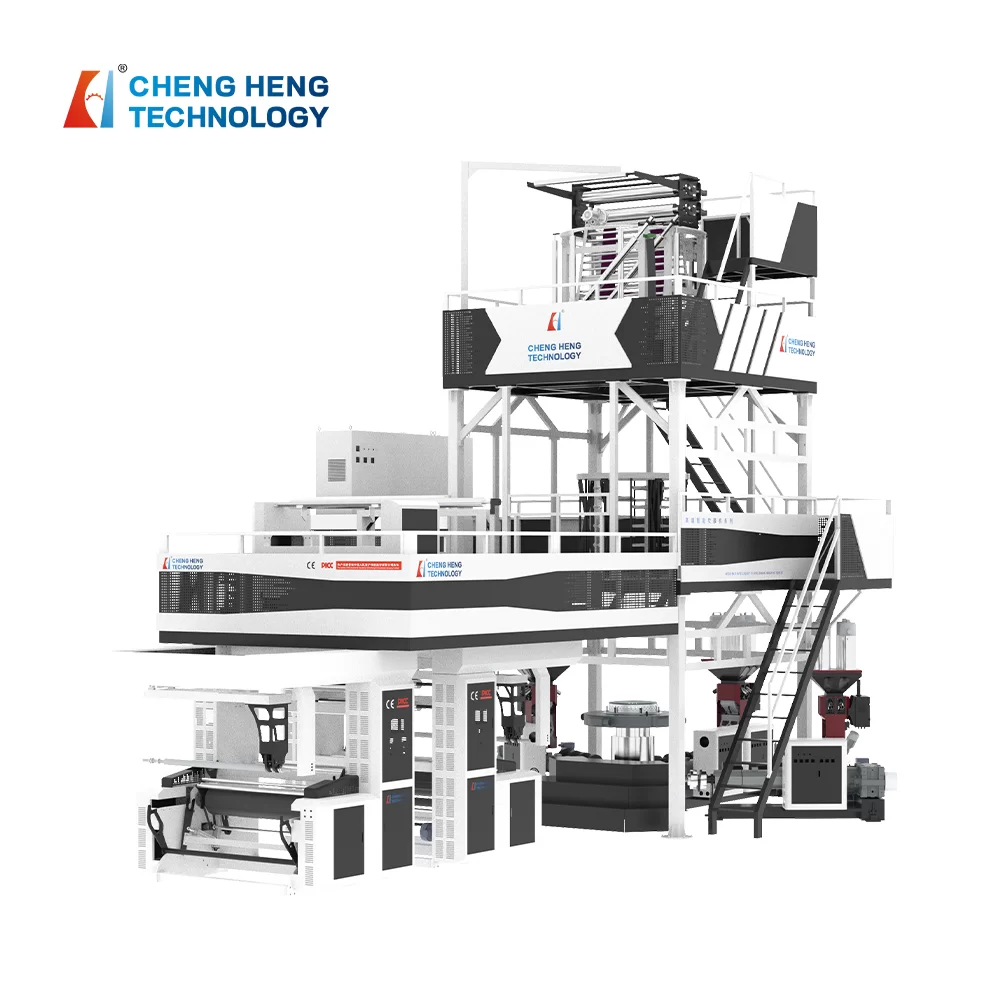
The Logic of Multi-Layer Co-extrusion
Multi-layer extrusion is not simply about adding more plastic; it is about the strategic placement of different resin properties. In a five-layer configuration, manufacturers can utilize an A-B-C-B-A or A-B-A-B-A structure. This allows the inner layers to provide oxygen or moisture barriers (such as EVOH or Nylon) while the outer layers provide sealability, gloss, and puncture resistance.
The primary challenge in this process is maintaining the stability of the bubble. As layers increase, the risk of interfacial instability increases. Advanced machinery employs precise temperature control and specialized die heads to ensure that each layer merges seamlessly without creating weak points or "optical haze" in the final film.
Technical Components and Precision Engineering
The heart of a high-performance extrusion line lies in the screw and barrel design. For complex films, the L/D ratio of the screw is critical—typically around 32:1—to ensure sufficient melting and mixing of the raw materials. Whether using HDPE, LDPE, or LLDPE, the extruder must maintain a consistent pressure to avoid surges that would fluctuate the film's thickness.
Another critical innovation is the vertical traction rotary device. In traditional lines, thickness variation can occur across the width of the film. A rotary traction system physically rotates the bubble as it is pulled upward, effectively averaging out the thickness and reducing the amount of scrap material produced during the startup phase.
Modular construction has also become an industry standard. By designing the machine as a series of assemblable modules, maintenance teams can access essential components for cleaning or servicing without dismantling the entire line, thereby reducing downtime and improving the overall equipment effectiveness (OEE).
Balancing Material Properties and Cost
One of the most significant advantages of utilizing multi-layer technology is the ability to incorporate recycled materials or fillers like CaCO3 without compromising the film's external quality. By placing these materials in the center layer, the "core" of the film can be more cost-effective, while the virgin resin skins maintain the necessary aesthetic and barrier properties.
The strategic placement of recycled resins in the inner layers allows manufacturers to reduce raw material costs by 15-30% while maintaining the high-performance specifications required for industrial packaging.
However, this requires precise control over the thickness of each individual layer. If the core layer is too thick, the film may lose structural integrity; if it is too thin, the cost-saving benefit is neutralized. This necessitates a control system that can adjust the feed rate of each extruder in real-time to maintain the desired ratio.
Efficiency Metrics in Modern Extrusion
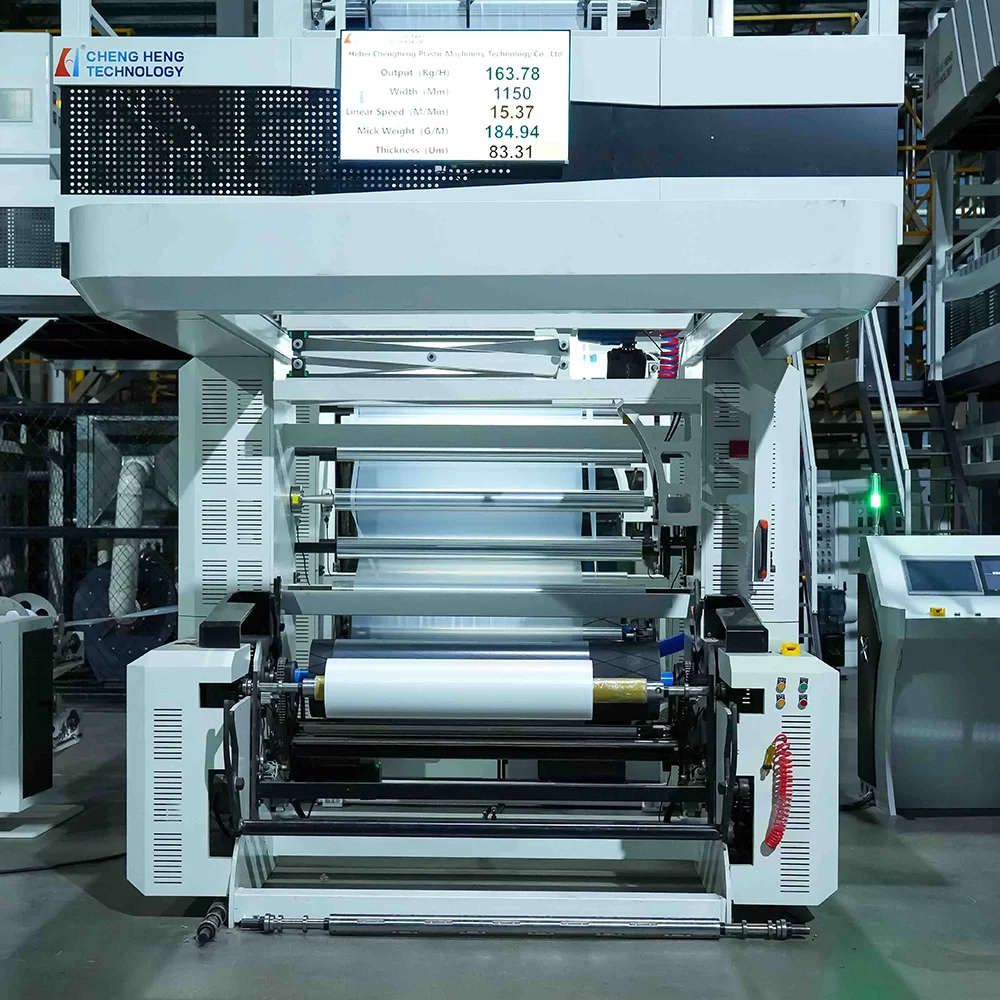
When evaluating the performance of an extrusion line, output is not the only metric that matters. Quality consistency, measured by the standard deviation of the film thickness, is the true indicator of machine precision. A high-end system can maintain a thickness range as tight as 0.008mm to 0.2mm depending on the material used, which is essential for shrink films and medical packaging.
Operational efficiency is also tied to the energy consumption of the main motors. Modern systems use optimized gearboxes and high-efficiency motors (such as those in the 18.5kw to 22kw range) to ensure that the energy per kilogram of output is minimized, directly impacting the bottom line of the production facility.
Figure 2. Performance Index Comparison by Layer Configuration
Application Scenarios for High-Barrier Films
In a typical industrial setting, high-barrier films produced by multi-layer machines are indispensable for food preservation. By utilizing a 5-layer structure, a producer can combine a moisture-resistant outer layer, a gas-barrier inner layer, and a strong heat-sealable inner skin. This prevents oxidation and extends the shelf life of perishable goods without the need for excessive preservatives.
Beyond food, these machines are critical for producing shrink films and industrial heavy-duty wraps. In these scenarios, the ability to control parameters like width (up to 1200mm) and thickness is crucial. For example, a manufacturer evaluating a shift to ABA or ABC vertical traction systems will find that the improved thickness uniformity significantly reduces the failure rate of bags during the subsequent bag-making process.
Future Directions in Polymer Processing
The industry is moving toward "intelligent extrusion," where AI-driven sensors monitor the melt pressure and bubble stability in real-time. This shift aims to eliminate the manual adjustment period usually required when switching between different resin grades, such as moving from HDPE to LLDPE.
Sustainability is the primary driver of innovation. There is an increasing demand for biodegradable and compostable multi-layer films. The challenge lies in the fact that bio-polymers often have different rheological properties than traditional plastics, requiring machines with more flexible temperature zones and specialized screw geometries to avoid degradation.
We are also seeing a trend toward extreme downsizing—producing thinner films that maintain the same mechanical strength. This "light-weighting" trend not only reduces plastic waste but also lowers transportation costs for the end-user, making high-precision multi-layer machines more valuable than ever.
Decision Framework for Equipment Selection
Choosing between a single-layer, three-layer, or five-layer system involves a trade-off between capital expenditure and product capability. While a single-layer line is cheaper and easier to operate, it cannot produce the specialized barrier films required for modern medical or food packaging.
For companies expanding their product portfolio, the modularity of the system is a key consideration. A machine that allows for customized die diameters (e.g., 100mm to 300mm) provides the flexibility to produce both narrow industrial tubes and wide packaging sheets on the same line.
Finally, the after-sales support and technical expertise of the manufacturer are paramount. Given the complexity of co-extrusion, having a partner who can provide guidance on resin ratios and temperature profiles is often more valuable than the hardware itself.
| Configuration | Barrier Capability | Material Flexibility | Typical Application |
|---|---|---|---|
| Single Layer | Low | Limited | Basic Trash Bags |
| Double Layer | Moderate | Moderate | Simple Shopping Bags |
| Three Layer ABC | High | High | Food Packaging |
| Five Layer | Very High | Very High | Medical/High-Barrier |
| Seven Layer | Extreme | Maximum | Specialized Tech-Films |
| Custom Multi-Layer | Variable | Variable | R&D/Specialty |
Questions & Answers
A 5 layer system allows for more complex resin combinations, specifically the ability to use two different barrier materials or a more robust "sandwich" structure. This results in significantly better gas and moisture barrier properties, allows for the use of more recycled content in the core without affecting the surface finish, and provides better mechanical strength through optimized layering.
The vertical traction rotary device rotates the film bubble as it is drawn upward. This mechanical rotation counteracts the natural tendency of the polymer to distribute unevenly due to gravity or air currents. The result is a film with a much more uniform thickness across its entire width, which reduces waste and ensures consistent performance during the sealing and cutting stages.
These machines are designed for a wide range of polyolefins, including HDPE (High-Density Polyethylene), LDPE (Low-Density Polyethylene), and LLDPE (Linear Low-Density Polyethylene). Additionally, they can process CaCO3 fillers and various recycled resins, provided the extruder screw and temperature controls are calibrated to the specific viscosity and melting point of the raw material.
Maintenance focuses on the heating elements and the screw cleanliness. Because multi-layer machines use different resins, preventing cross-contamination is vital. Modular structures allow for easier cleaning of the die heads. Regular checks of the gearbox and main motor lubrication are also required to maintain the high-speed operation and stability of the traction system.
Yes, most professional lines are customizable. Parameters such as the die diameter (typically ranging from 100mm to 300mm), screw diameter, and motor power can be adjusted based on the desired film width and thickness. For instance, output can range from 40kg/h to 200kg/h depending on the specific model and the raw materials used.
The choice depends on the required film properties. An ABA structure is typically used for symmetrical properties, where both sides of the film need the same characteristics (like sealability). An ABC structure is used when the two outer surfaces need to be different—for example, one side optimized for printing and the other for high-temperature sealing.
Final Thoughts
The transition to multi-layer extrusion is a necessary evolution for any packaging manufacturer aiming to compete in the high-barrier segment. By leveraging the capabilities of a 5 layer blown film machine, companies can achieve a sophisticated balance between material cost and product performance, ensuring their films meet the rigorous demands of modern industrial and consumer applications.
Ultimately, the success of such an investment depends on the synergy between high-precision hardware—such as vertical traction rotary devices—and the technical expertise required to optimize resin layers. As the industry moves toward more sustainable and intelligent processing, the ability to precisely control polymer structures will remain the primary competitive advantage.
- 5 layer blown film machine Technical Performance Analysis
- monolayer blown film machine technical performance analysis
- multilayer blown film machine ABA technology performance analysis
- aba blown film machine technical performance analysis
- Blown Film Machine Manufacturers Vertical Traction Performance Analysis